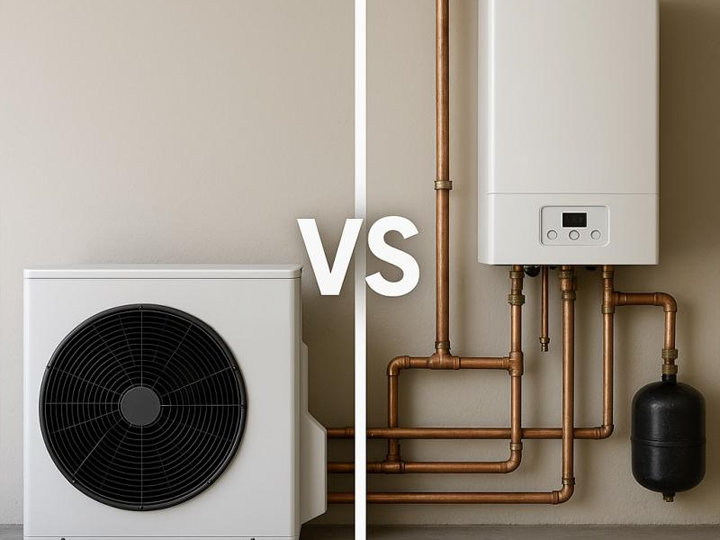
When selecting a heating system, the most critical factor is the total cost of ownership: investment cost, fuel/electricity consumption, maintenance, and system lifespan. A heat pump is an efficient solution that extracts heat from the external environment (air/water/ground). Under suitable conditions, it can produce 3–5 units of heat with 1 unit of electricity (COP), which reduces energy costs in the long term. Efficiency is further increased with systems such as underfloor heating or low-temperature radiators. It is also a powerful alternative in areas without natural gas infrastructure.
Conventional boilers (natural gas, LPG, fuel oil, etc.) may be more affordable initially and respond quickly in buildings requiring high temperatures. However, they are dependent on fuel prices; efficiency varies depending on the type of device and usage habits. Condensing boilers are more economical, but they still have the disadvantages of fossil fuel costs and emissions.
When making a decision, the building’s insulation level, heat loss, climate conditions, electricity unit price, existing installation (radiator/underfloor heating), and investment budget should be evaluated together. While heat pumps are generally the most economical option in well-insulated buildings and low-temperature systems, choosing the right boiler can still offer advantages in high-temperature requirements.